From Our Pool Experts
Practical advice for pool owners and enthusiasts

Why You Should Plan Your Pool Construction and Landscaping Together
The pool gets handed over. The water is in, the tiles are clean, and the garden around it is still bare ground. Pool landscaping starts months later, often with a different company, and by then the deck levels, the drainage falls and the equipment position are all fixed.

8 Things to Know Before Designing a Swimming Pool in Dubai
A pool design gets signed off in a meeting that lasts an hour. Shape, tile, coping, lighting, done. Designing a swimming pool in Dubai means settling a second set of decisions that are rarely on the table in that meeting.

How to Choose the Perfect Swimming Pool for Your Villa in Dubai
Shape is the first thing most villa owners settle, and the smallest part of the decision. In Dubai, what separates a pool your family swims in every week from one that sits covered from May to September is not the outline on the plan.

How a Private Pool Can Boost Your Property Value in Dubai
If you own a villa in Dubai, or you're thinking about buying one, you've probably wondered whether a pool is worth what it costs to build and keep.
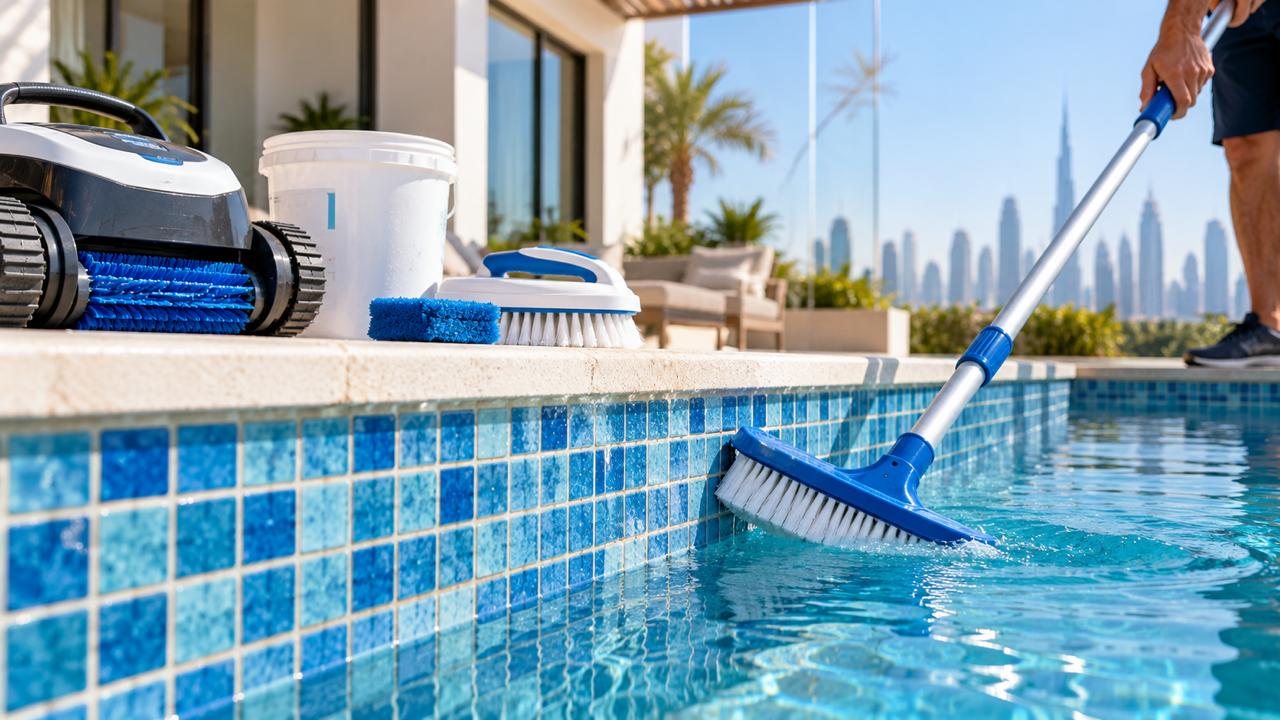
Pool Cleaners Dubai: Best Pool Tile Cleaning Tips and Tools
The white crust along your waterline is not dirt, and scrubbing harder will not remove it. It is calcium scale: mineral deposits left behind as water evaporates at the surface.
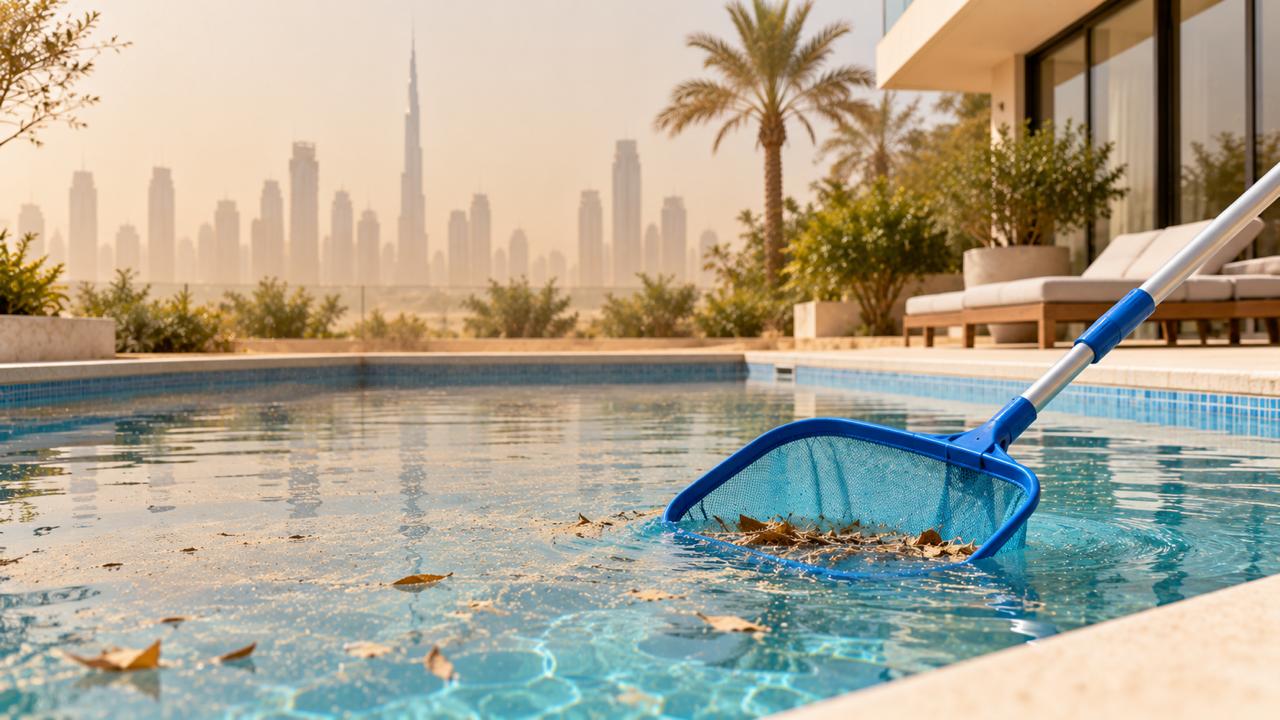
Why Pool Cleaning Matters More During Dusty Weather
After a dusty spell in Dubai, most villa owners look at the pool, see grit on the bottom, and reach for the vacuum.
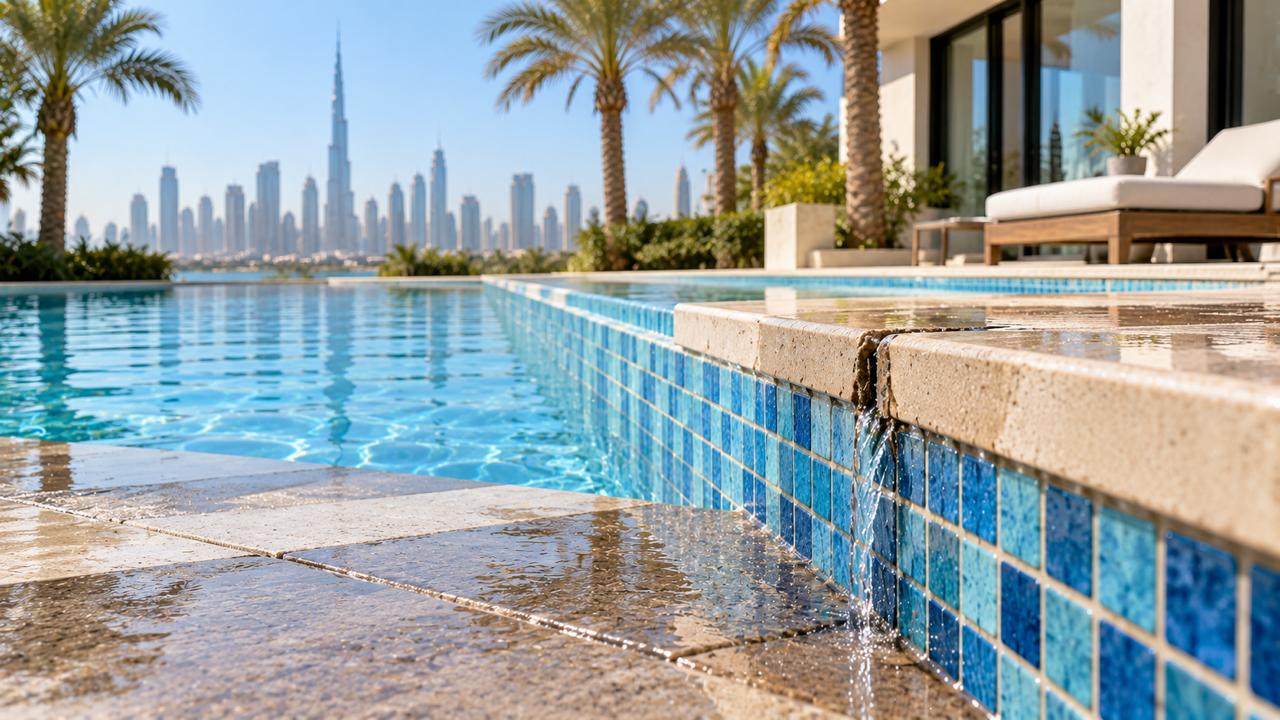
Is Your Pool Leaking? 5 Warning Signs Villa Owners Should Watch For
Most advice online gets this wrong for our climate. American and European pool sites say water loss above a quarter inch a day probably means a leak.
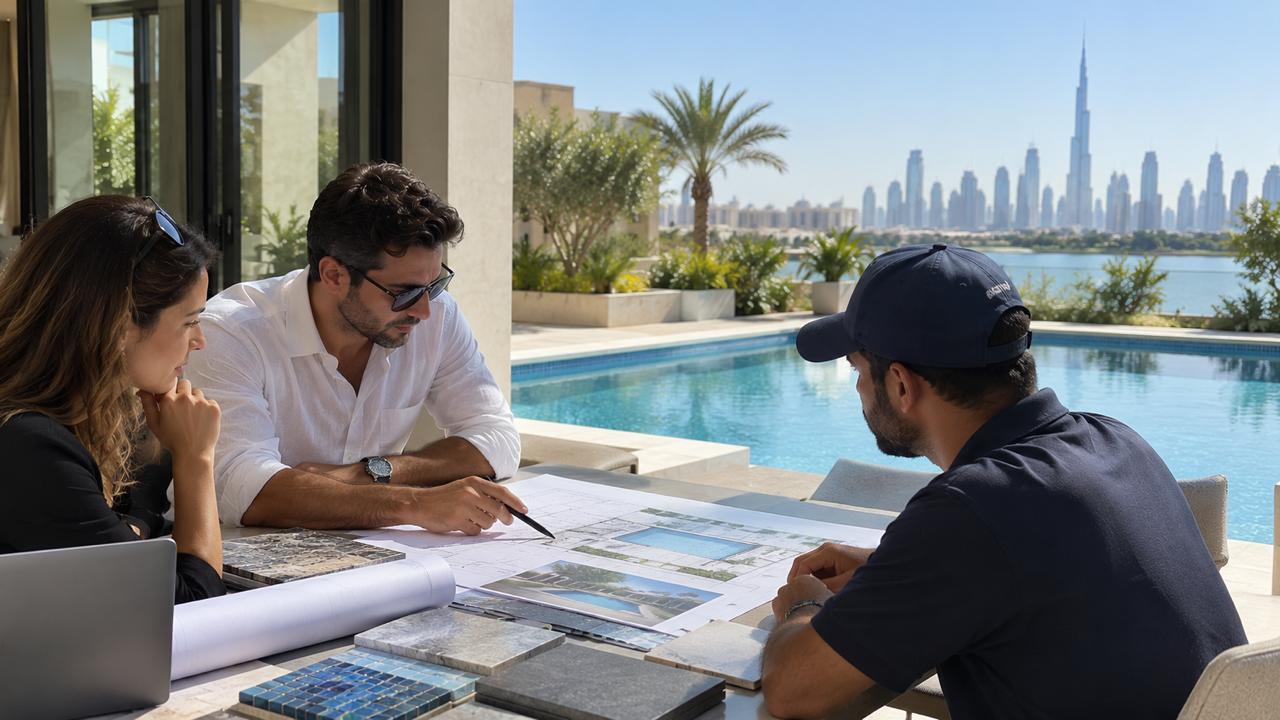
How to Brief Your Pool Contractor: A Guide for Architects
An architect hands over a drawing showing a rectangle in a garden, dimensioned and positioned, and assumes the contractor will handle the rest.
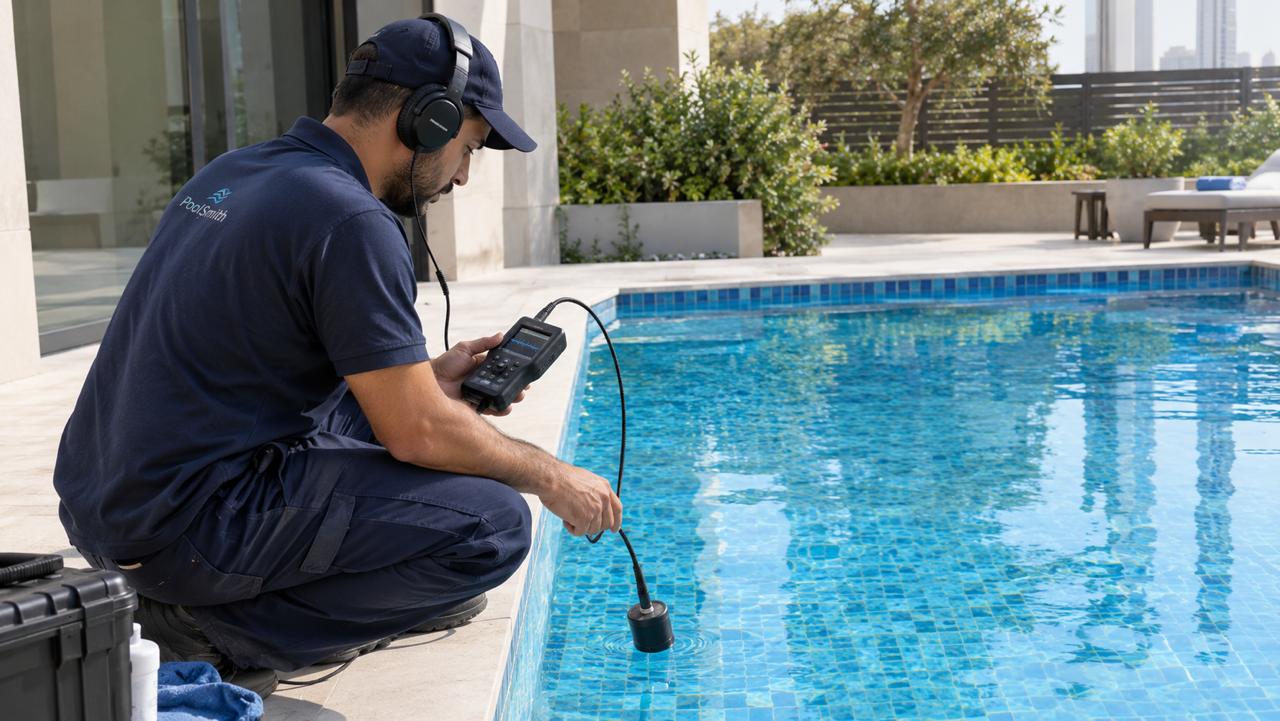
How Pool Leak Detection Experts Find a Leak Without Breaking Tiles
When a villa owner confirms a pool leak, the next fear is usually the same: they are going to have to dig up the garden
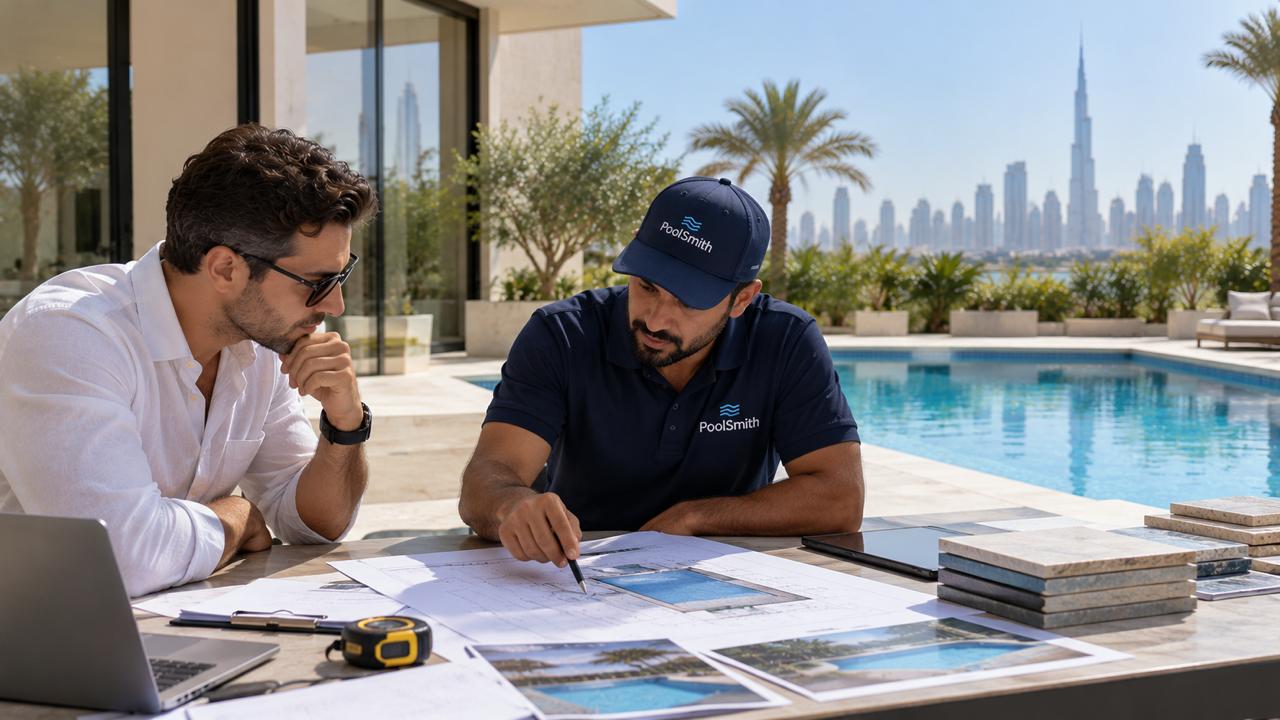
8 Questions to Ask Swimming Pool Contractors in Dubai Before You Hire
Most villa owners choose a pool contractor the same way: three quotes, a look at some photos, and the lowest number that still feels safe.
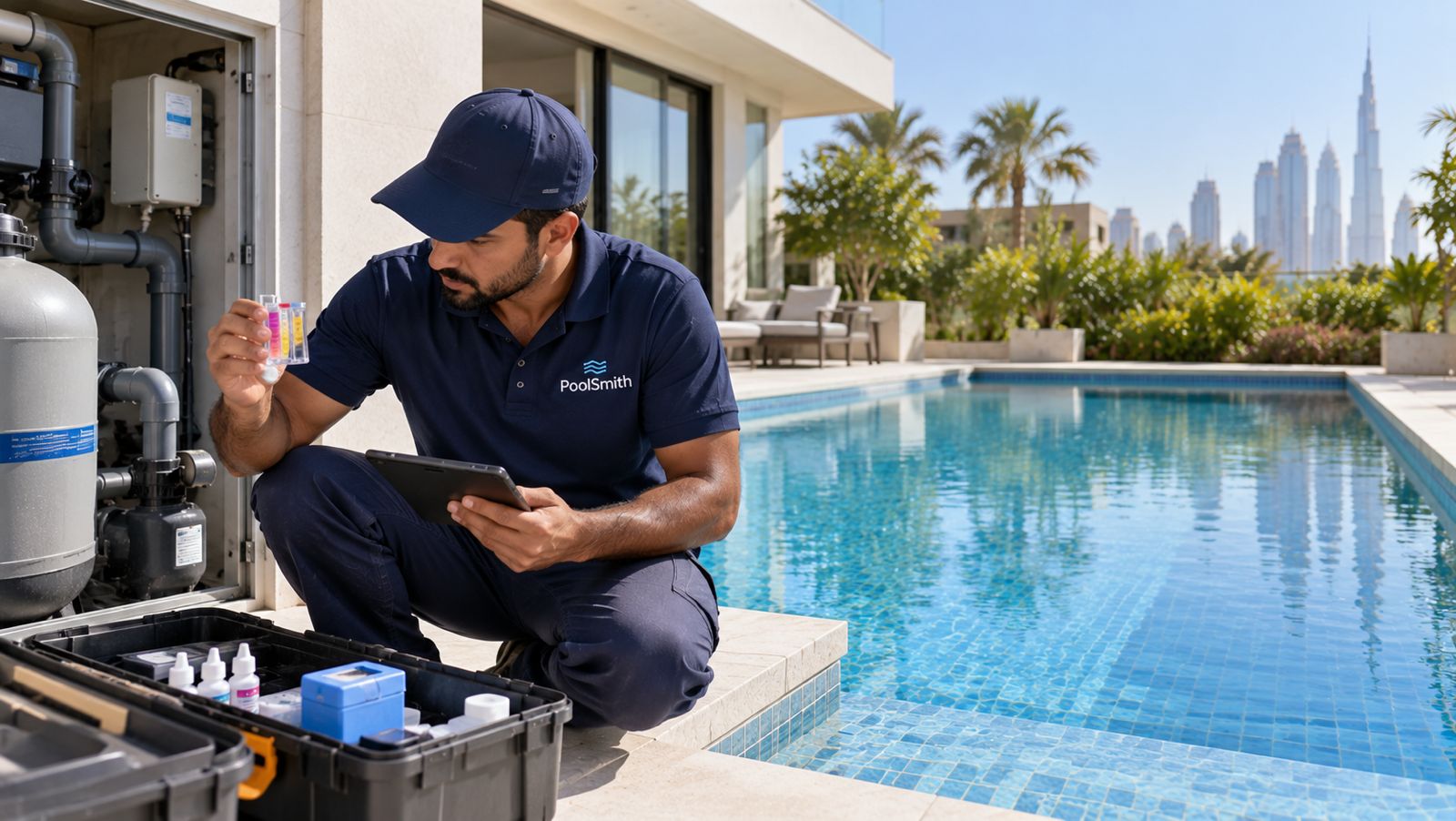
What a Pool Maintenance Company Checks on Every AMC Visit
Ask most villa owners what their pool technician does, and the answer is "cleans the pool". Ask how they know, and the answer is usually "the water looks fine".
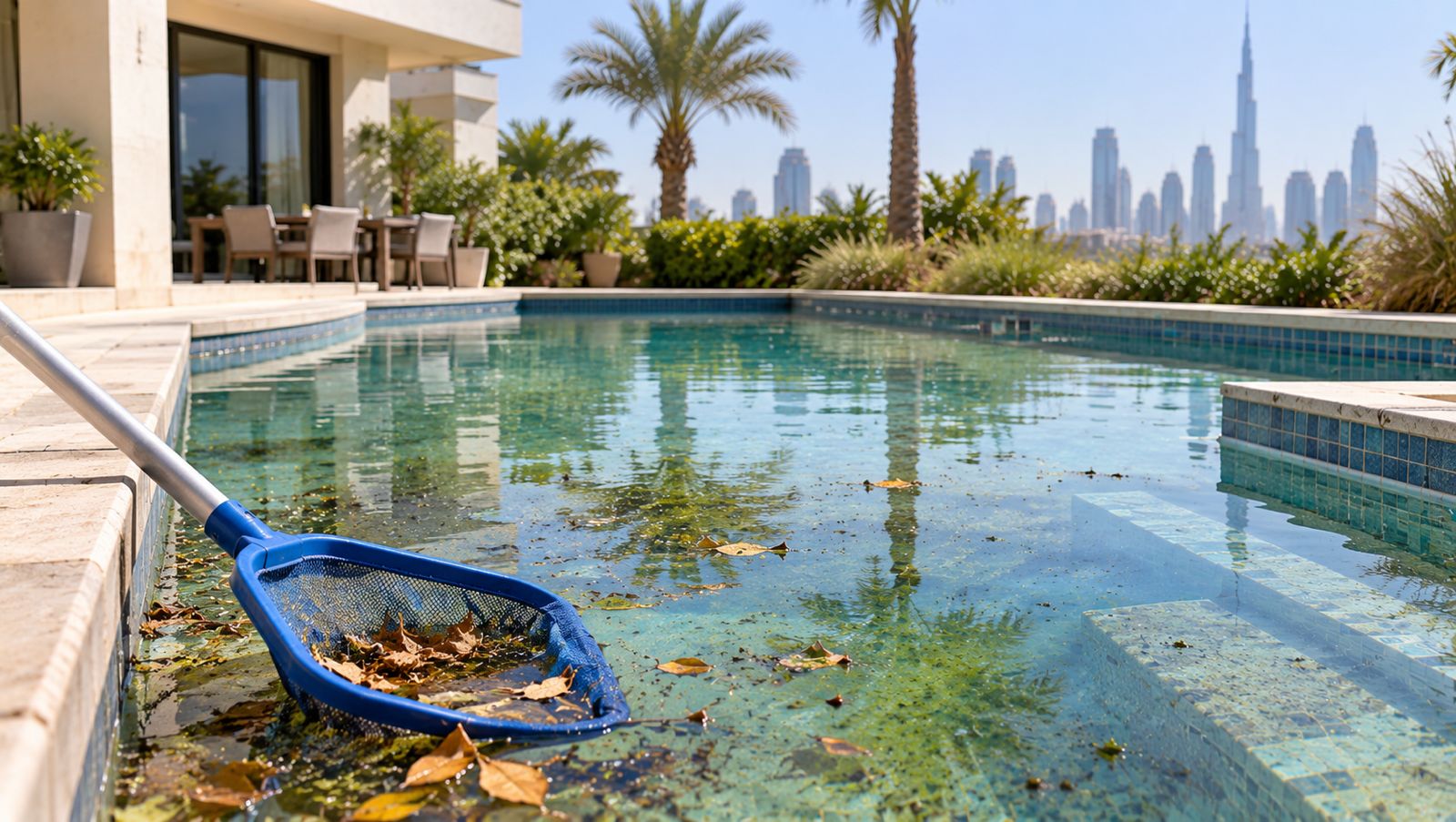
7 Signs Your Villa Pool Needs Professional Cleaning
Most villa owners judge their pool by one test: can I see the bottom? If yes, the pool must be fine.